
If you had to identify the single biggest source of unrealised revenue inside most lead generation operations, it would not be the high-intent leads that were missed. It would be the medium-intent leads that were handled wrong.
Medium-intent prospects are not weak leads. They are timing leads. The fit is good. The interest is real. But something is creating friction that makes an immediate sales conversation premature.
That friction could be timing. They are six to eight weeks from being ready to move. Their budget cycle opens in the next quarter. They are waiting on an internal decision before they can engage properly. They need to finish evaluating another option. They want to present the case internally before committing to a conversation.

None of those things mean the prospect is not going to buy. They mean the prospect is not going to buy right now. That is a very different commercial situation, and it requires a very different response.
Most businesses make one of two mistakes with medium-intent leads. They push them hard into a sales process they are not ready for, which creates a conversation that feels premature, pushes the prospect away, and turns a potential future buyer into someone who stops engaging. Or they drop them into a generic nurture sequence, a drip campaign with no commercial intelligence behind it, that sends the same messages to everyone regardless of what they said during qualification.
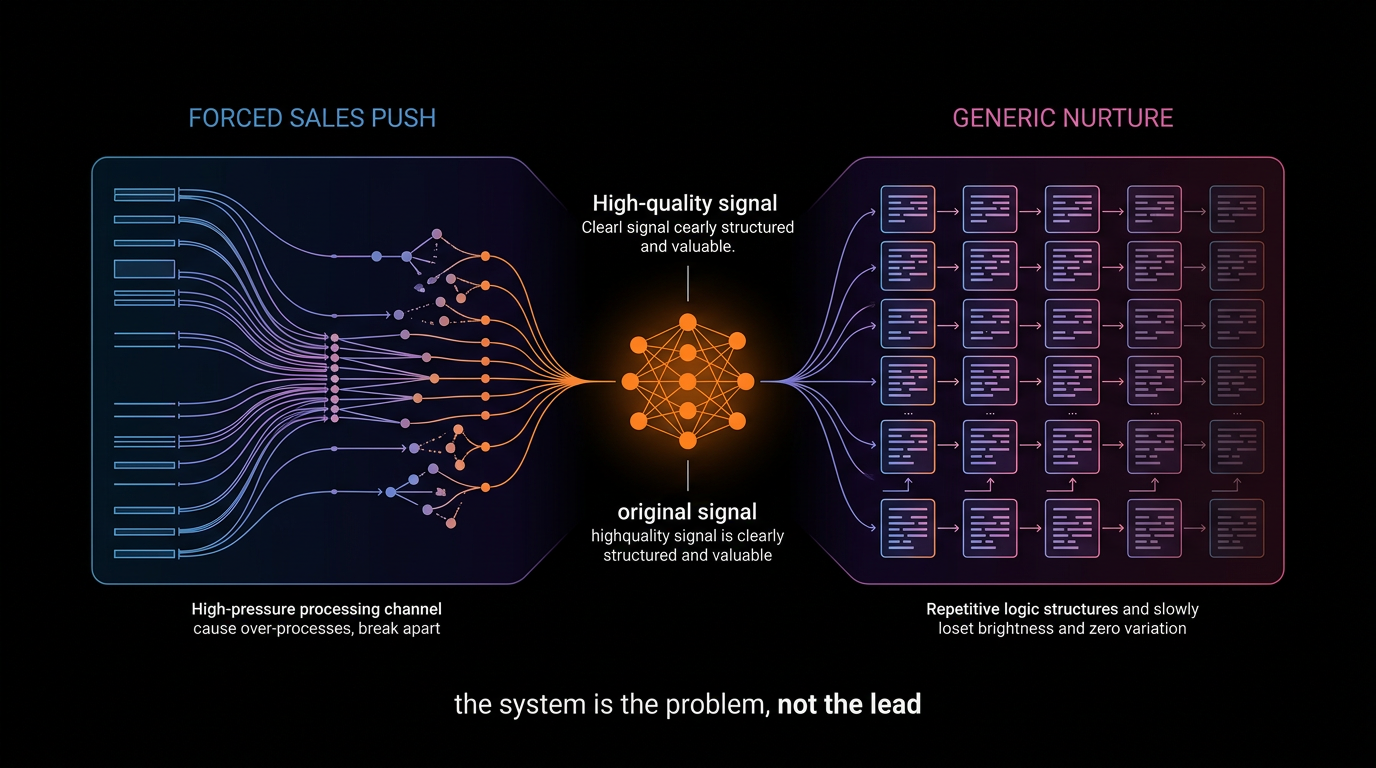
Both approaches waste the asset.
Medium-intent prospects told you something when they were being qualified. They said why they were not ready. They explained the friction. Whether it was budget timing, internal process, a competing priority, or something else, that information is commercially valuable.
The right nurture strategy uses that information. If a prospect said the timing was off because of a budget cycle, the follow-up sequence should be timed to that cycle. If the friction was internal alignment, the follow-up should address the internal case, not keep selling the external one. If they were still evaluating alternatives, the communication should be designed to help them reach clarity, not to push for a close.

That kind of intent-informed nurture is not complicated to build when you have the qualification data to inform it. And when it is built properly, the medium-intent segment becomes one of the most commercially productive parts of the whole system.
These are buyers. They just need the right follow-up at the right time. And they will tell you exactly what that looks like if your qualification system was built to capture it.


