
There is a distinction at the centre of everything we do at GAS Marketing Automation, and it is one that most businesses in South Africa have not yet fully absorbed. It is the difference between interest and intent.
Interest is the easiest thing in the world to generate. With the right paid social creative, the right LinkedIn message, the right offer framing, you can get people to click, enquire, fill in a form, reply to a message, or raise their hand. Modern tools are extraordinarily good at producing that response. AI makes it faster and cheaper than ever before.
But response is not readiness. And readiness is the only thing that actually matters to a sales team.
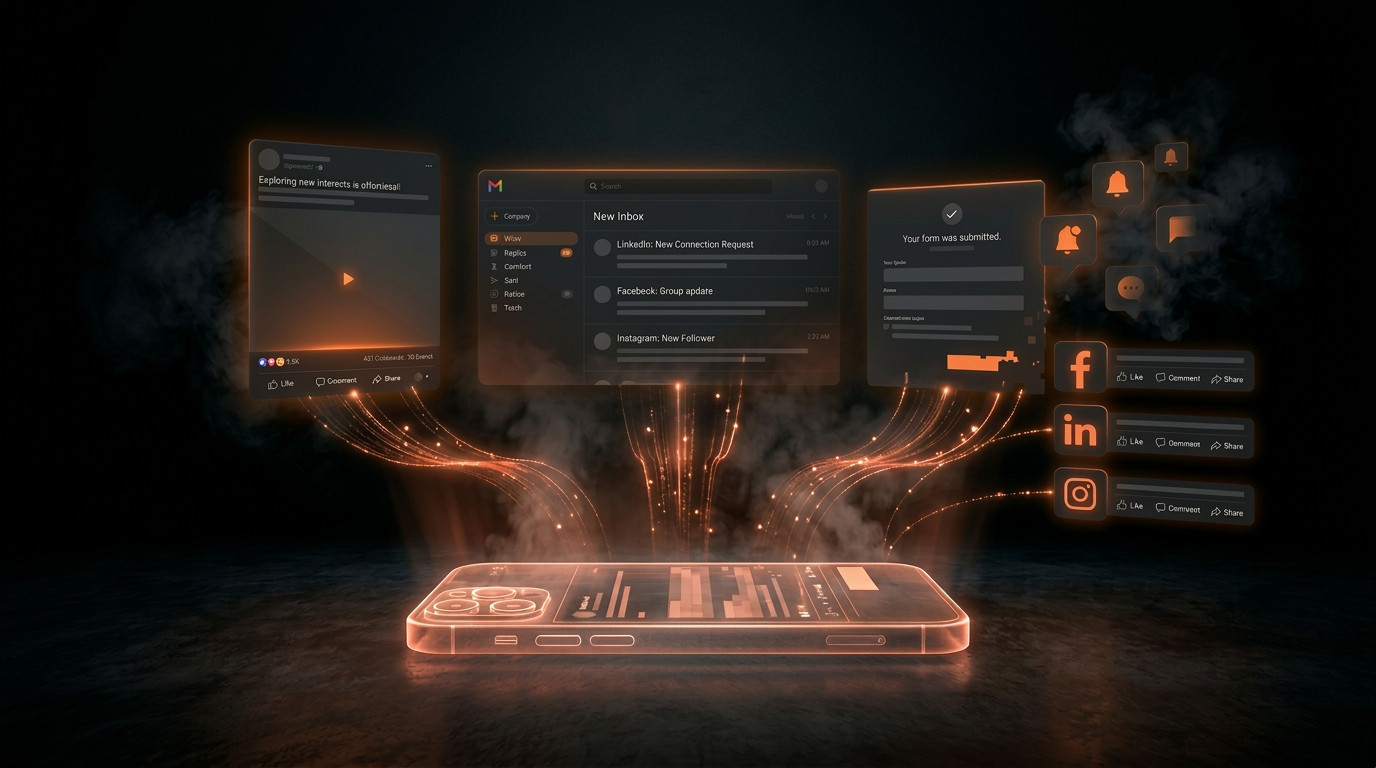
Intent is something different. It is directional. It carries weight. A person with genuine buying intent is not simply reacting to content or satisfying curiosity. They have a problem that needs solving, a timeline that creates pressure, a budget that has been considered, and some level of authority to move. That combination does not show up automatically in a form fill or an inbox reply.
The lead generation industry has spent years building systems that optimise for interest and then hoping that sales teams will somehow convert that interest into revenue. The supplier celebrates the response. The client wonders why the pipeline is not closing. And the blame game begins.
It begins because both sides are measuring different things. The supplier measures activity. The client measures outcomes. And those two metrics are not the same thing.
This is not a new problem. It has always existed. What has changed is that AI has made it dramatically worse. Because now every business can generate more responses, more messages, more top-of-funnel activity at a fraction of the previous cost. AI has compressed the effort required to create interest. It has done nothing to address the gap between interest and intent.

In fact, it has widened it. When everyone can produce more attention at lower cost, attention becomes less meaningful. The signal gets weaker as the noise gets louder. And the businesses that keep measuring success by lead volume, response rates, and inbox activity find themselves busier than ever with less to show for it commercially.
This is exactly why we built PSI.
PSI stands for Pre-Sales Intelligence. It is a qualification architecture that sits between the moment someone shows interest and the moment your sales team picks up the phone. Its job is not to generate more conversations. Its job is to interpret the conversations that are already happening and identify which ones carry genuine commercial weight.
That job requires more than a form. It requires more than a chatbot. It requires a structured, intelligent qualification layer that understands context, reads buying signals, assesses fit, and makes a decision about where this person actually sits between curiosity and commitment.
The businesses that are going to win the next phase of AI lead generation are not the ones that figure out how to produce the most activity. They are the ones that build the best intelligence layer around buyer readiness.
Interest gets you into the conversation.
Intent tells you whether the conversation is worth having.
That is the distinction that changes everything. And it is the distinction that every business in South Africa needs to understand before they spend another rand on paid media or outreach.
The gap between interest and intent is not a marketing problem. It is a structural one. And structure is exactly where we start.


