
.png)
One of the biggest structural flaws in traditional lead generation is binary thinking.
A lead is either qualified or unqualified. Good or bad. Worth calling or not worth calling. That binary cuts the conversation in two places where it should be operating across a much wider range.
Real buyer journeys are not binary. People exist in different states of readiness at different moments. Some are ready now. Some are promising but need time. Some are misaligned in a way that makes them a poor fit today but potentially valuable in six months. And some should never have entered the system in the first place.
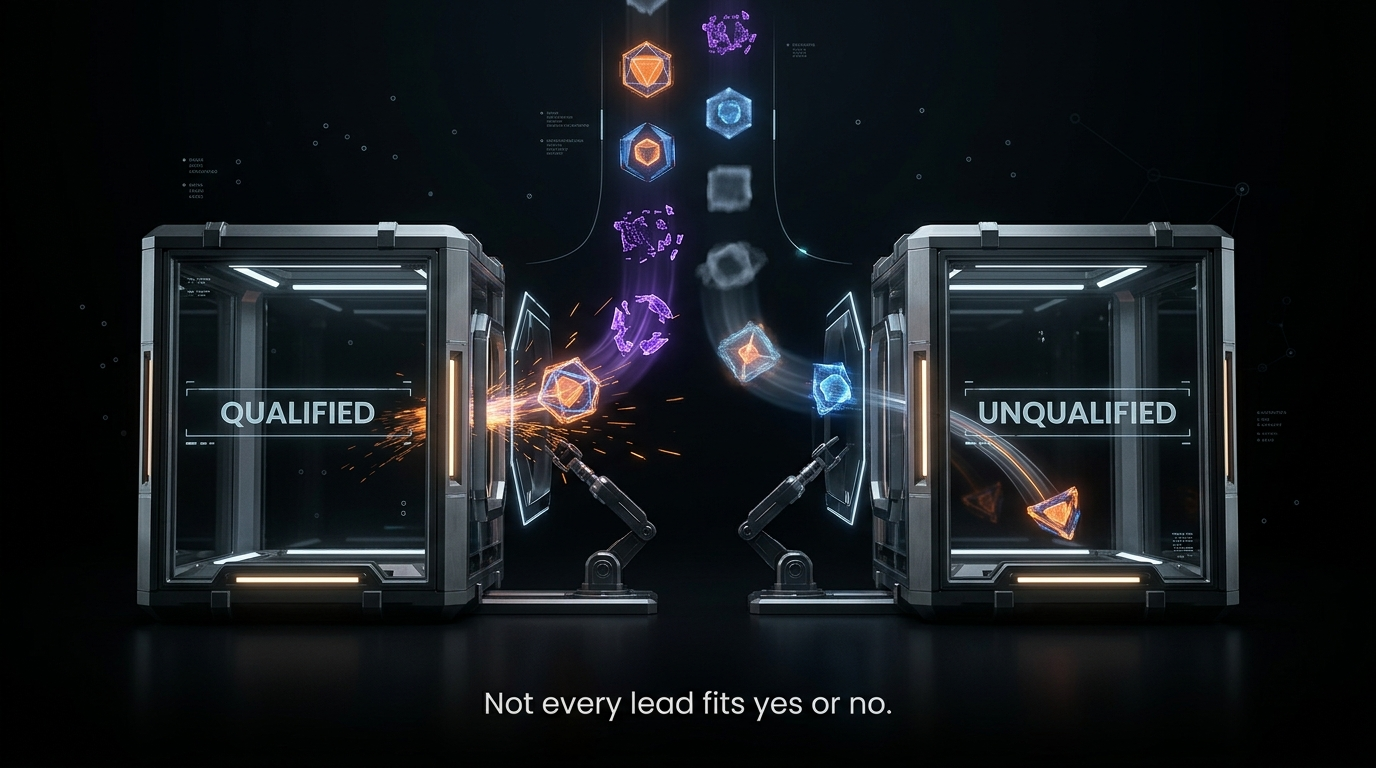
If you treat all of those people the same way, you are misallocating commercial energy at every level.
That is why PSI produces intent tiers rather than a binary qualified or unqualified verdict. Every prospect that moves through the PSI qualification system is classified into one of three categories, and each category determines what happens next.
High intent is the clearest category. These prospects are showing strong buying signals. Their timing is real. Their budget has been considered. Their authority to make a decision is either present or accessible. The specificity of their problem suggests urgency. These leads go to sales immediately, with the full conversation context attached. Sales does not start from zero. They start from a position of genuine momentum.
Medium intent is the most commercially important tier to understand properly. These prospects are good fits. Their interest is legitimate. But something is creating friction. Timing may be slightly off. Internal alignment may not be complete. They may be in an early comparative stage. The common mistake is to either push them hard into a sales process they are not ready for, or to drop them into a generic nurture sequence that ignores everything they said during qualification.
Neither approach serves the business. Medium intent leads deserve structured, signal-led follow-up that reflects the specific friction they revealed. Budget hesitation needs different communication than a timing delay. An internal approval blocker needs different nurture than a use case query. Intent-informed email sequences do this work. Generic drip campaigns do not.
Low intent is the final category. This includes prospects who are genuinely curious but have no near-term buying need, people who are significantly misaligned with the client's offer, and enquiries that surface early-stage interest with no commercial traction behind it. Some of these prospects receive light nurture with the goal of developing their intent over time. Some are disqualified.

Disqualification is not failure. It is an active commercial decision. Filtering low-quality volume out of the system protects the time of the sales team, which is a resource with real cost. A system that qualifies well protects sales as much as it serves them.
Intent tiering changes the conversation from 'how many leads did we get' to 'what percentage of our demand is actually sales-ready.' That is a far more commercially honest question.


