
.png)
Adoption is up. Output is up. Exhaustion is up too. The busyness has a structural cause, and a tool will not fix it.
Two years into the AI boom, a strange pattern shows up in almost every business I talk to. The team adopted the tools. They wrote the prompts, built a few automations, and saved real hours. Then the hours filled up again.
The reports came back in a new format. The automation broke after a platform update. The cleared plate got restacked with more of the same work. Six tools later, the marketing manager is busier than before the first licence was bought.
Nobody did anything wrong. The approach was wrong.
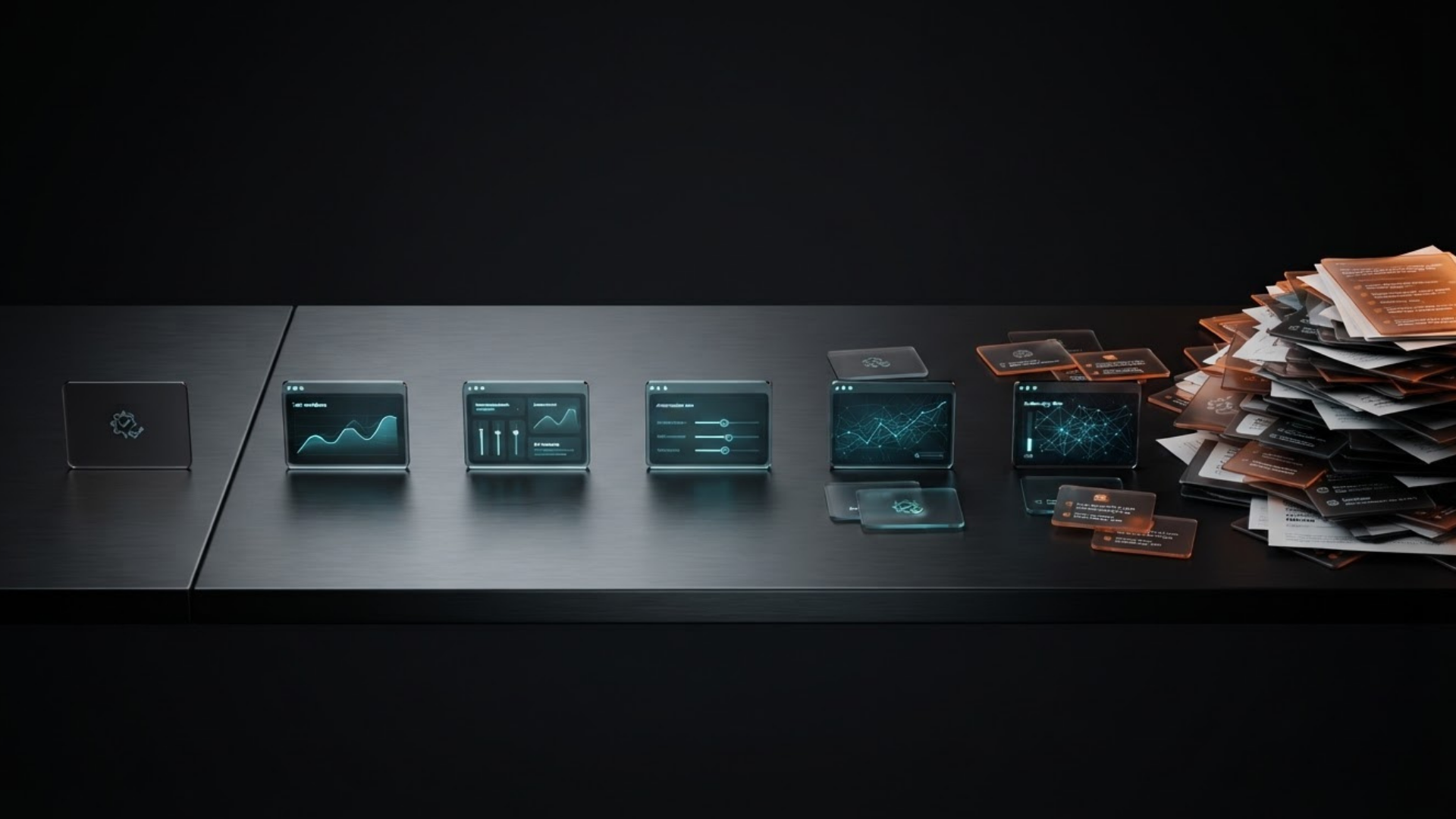
Automate one task and you have emptied a slot in somebody's week. The organisation around them refills it, because the system producing the busywork is still running. New requests, new reports, new formats, new tools to manage. Task-level AI is a bucket bailing water out of a boat with the leak still open.
There is a second cost hiding in the tool pile. Every tool needs someone to learn it, prompt it, check its output, and repair it when the interface changes. Teams end up managing their AI the way they used to manage their admin. The busyness changed shape and kept its size.
The fix is not another tool. It is changing the shape of the work itself: deciding which work should never reach your team at all, then building a system around AI to keep it away permanently.

At GAS we run 13 strategists and 11 AI agents. The honest version of how we got there: we did not hand our strategists a stack of AI licences and wish them luck. We tried versions of it early on, and it produced exactly the pattern above, capable people spending their days operating tools.
So we rebuilt the production line instead. Research, media planning, copywriting, creative production, compliance checks and proposal builds now run through AI agents as systems, built once, tested against real campaigns, maintained by our engineers. The work never lands on a strategist's plate, so their week holds what it should: client thinking, market judgement, and the calls machines do not make.
Humans decide, machines produce. Not because the slogan sounds good, because the alternative is talented people doing production admin at senior salaries.

Look at where the pattern hits hardest for our clients: the sales floor.
Salespeople are hired to close. Most of their week goes into qualifying, chasing enquiries, asking the same five questions, working out who is real. Give them an AI tool and you have added a login to their day. The qualifying work is still theirs, now with software attached.
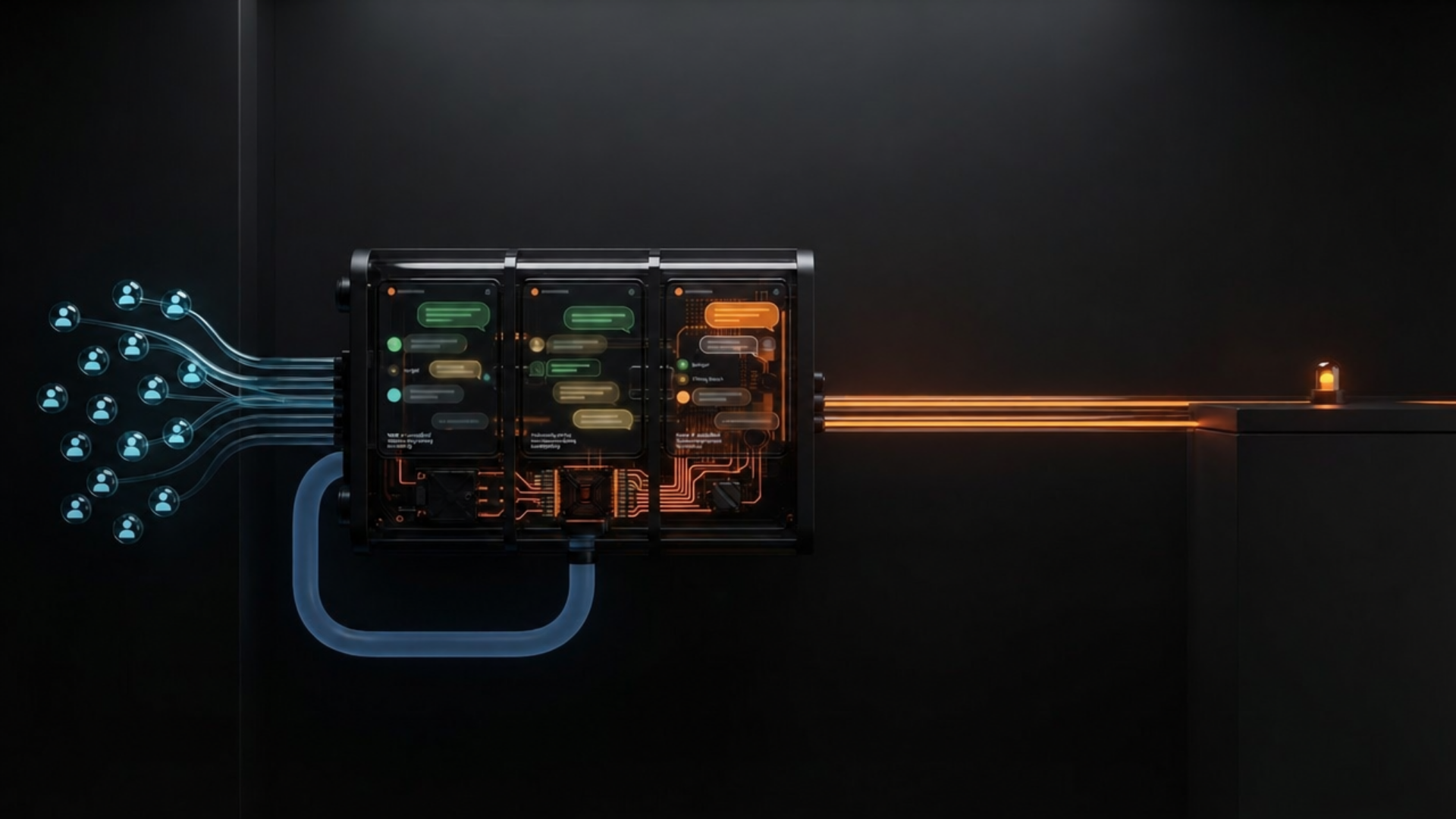
PSI, our Pre-Sales Intelligence system, takes the opposite route. It removes qualification from the sales team's week entirely. Every enquiry from paid media opens a WhatsApp conversation, an AI agent qualifies budget, timing and intent within seconds, and scored, sales-ready prospects arrive with the full transcript attached. The sales team operates nothing and learns nothing new. The draining work is gone, not accelerated.
One client conversation sums up the difference. The complaint was never "our tools are too slow". It was "my team is exhausted and the good leads slip through". A tool speeds up the exhausting work. A system deletes it.
Before signing for another licence, run one test on the busyness in your business:
Which work drains the team without needing their talent? Qualifying leads, pulling reports, resizing assets, first-draft copy, follow-up admin.
Would a tool speed it up, or would a system remove it? Speed keeps the work on your team's plate. Removal takes it off for good.
Who maintains it when the platform changes? A tool your team babysits is a new job. A system someone else maintains is a solved problem.
If the answers point at removal and maintenance, you are not shopping for software. You are shopping for finished work, and buying it is our entire business model.

The goal was never for your people to become AI operators. The goal was for AI to absorb the draining work so your people spend their week on the work they were hired for. Judgement, relationships, closing, strategy. The things on a busy calendar have been crowding out for years.
If your team adopted the tools and is somehow busier, the problem is the shape of the work. We fix the shape.
Do not fill in a form. Send us a WhatsApp message, tell PSI what your team is drowning in, and watch how a system answers. The same one we sell is the one replying.
Let's have a conversation that counts.


